Classic Bowling: how to play
A game of pinball with a game of bowling inside it. Shoot up the lane into the pins, and every roll goes on a real bowling card, scored with strikes and spares. Marks spell S-T-R-I-K-E for Strike Party multiball, and a good card lights the Tenth Frame.
New to pinball? How to play covers the basics. Classic Bowling is a three-ball game with an 8-second ball save.
The shots
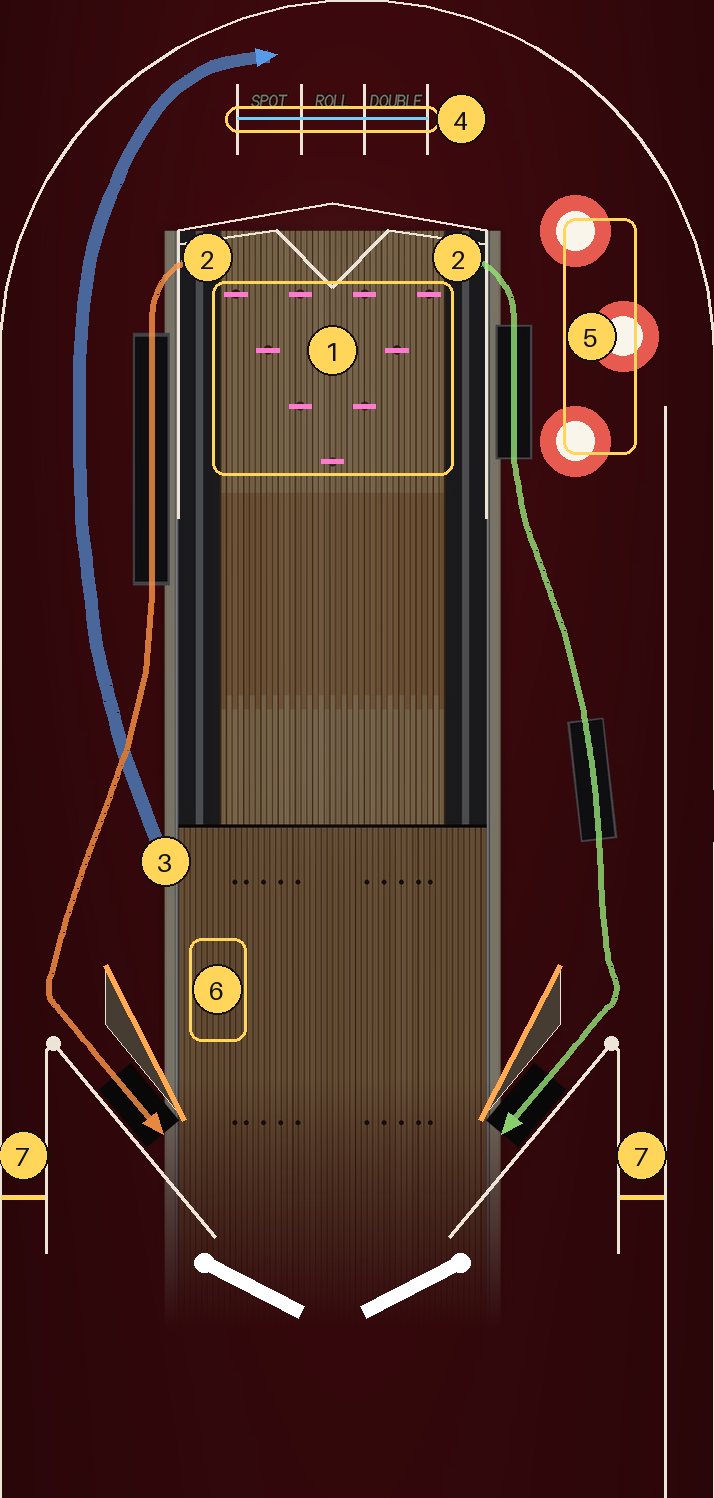
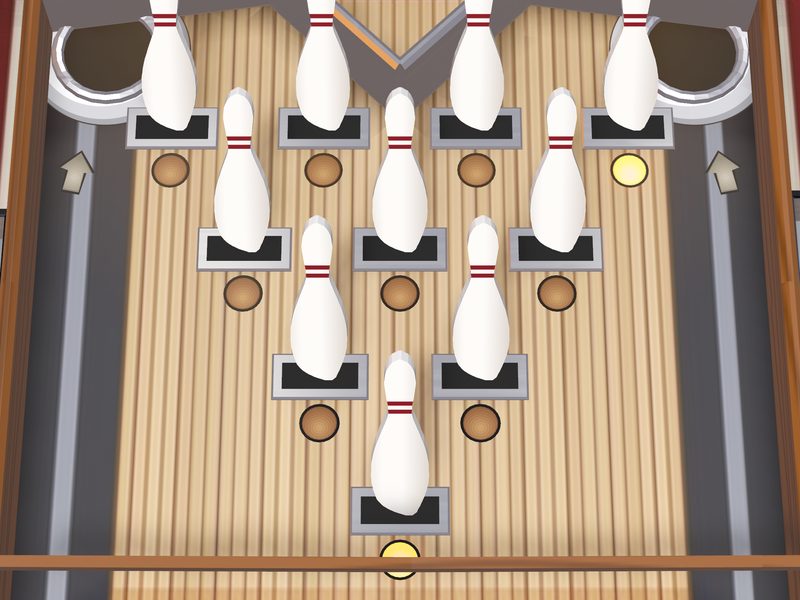
- 1The pins, ten drop targets at the end of the lane.
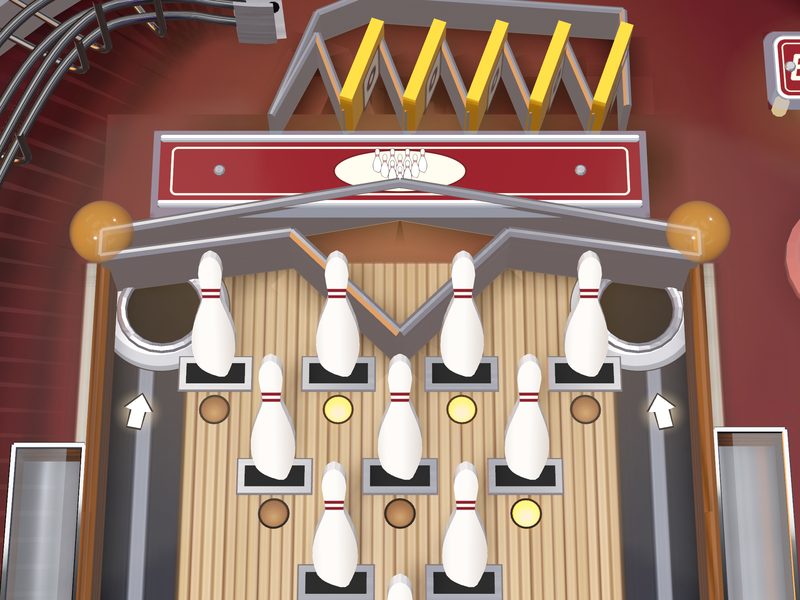
- 2Pits, one in each back corner of the pin deck. A ball in a pit ends the roll.
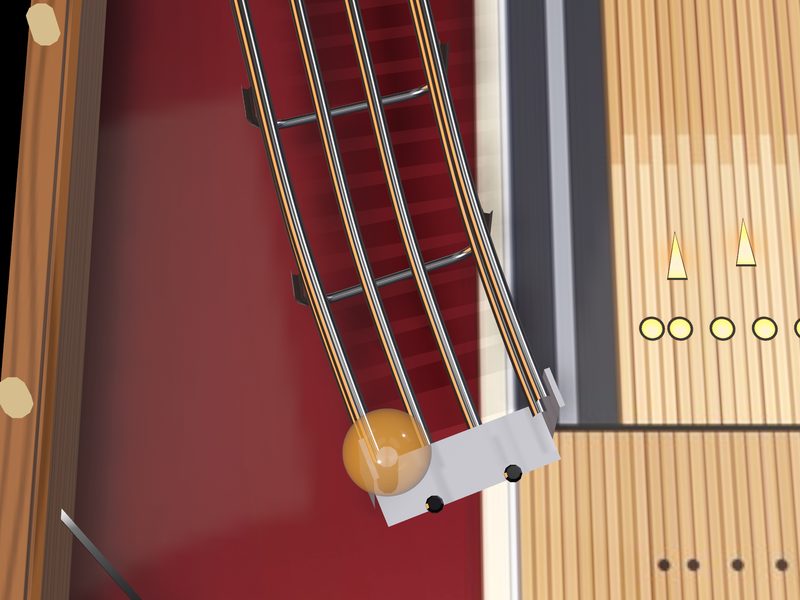
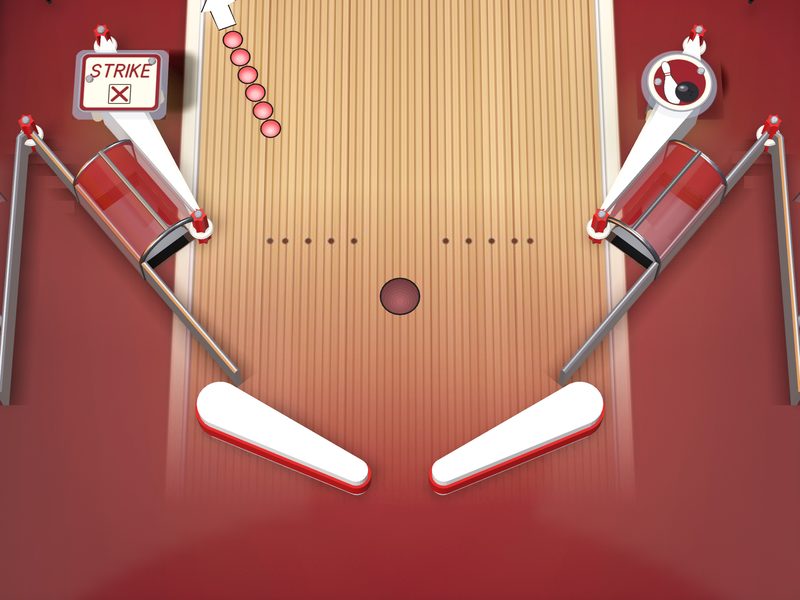
- 3The ramp up the left side, a shot for the right flipper. It lands the ball above the pins.
- 4Top lanes, SPOT, ROLL and DOUBLE, above the pins, each with an award.
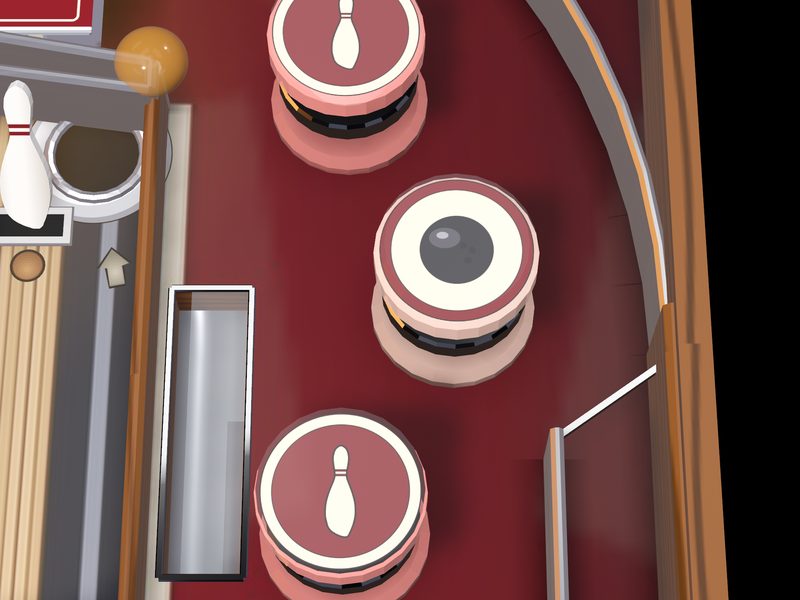
- 5Pop bumpers on the right.
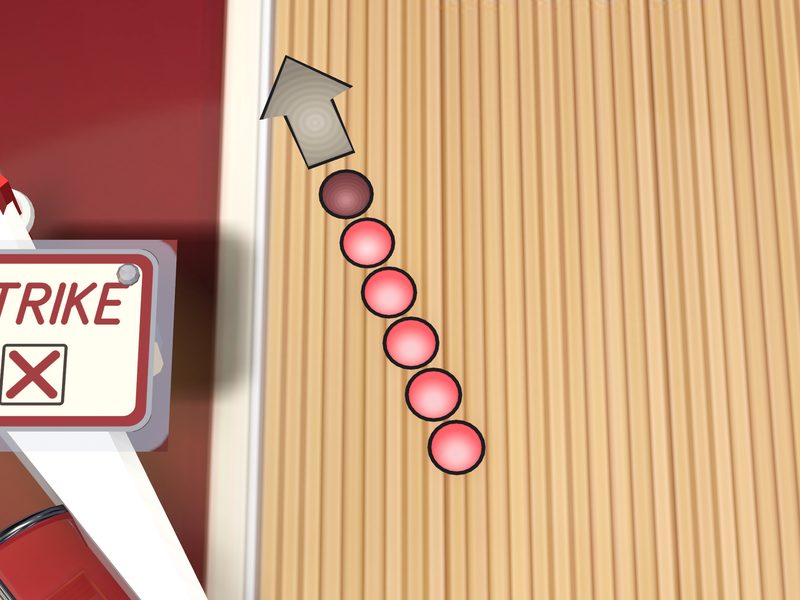
- 6S-T-R-I-K-E lights, up the ramp's approach.
- 7Kickbacks, one in each outlane.
Up close
Each numbered shot as it looks in the game.

Rolls and frames
Each pin is a drop target, and you can knock them down however you like: up the lane, off the bumpers, from above off the ramp. A roll, one bowling ball, lasts until one of these happens:
- The ball drops into a pit at the back of the deck. The pins down since the roll began are its count. The ball rides a subway under the playfield, which you can watch through windows in the board, and pops up from a red hood at the top of that side's inlane.
- All ten pins are down, and two seconds pass. The roll ends by itself. If a ball is still loose in the pin deck, the sweeper bar comes down and pushes it into a pit first.
- Your ball drains. That roll is a gutter ball: it scores 0 and its pins stand up again. A drain during the ball save gives the ball back with no gutter.
Then the card moves on as in bowling: the second ball of a frame faces the pins still standing, and a fresh rack stands for each new frame. The display shows the ball, frame and roll, and the goal line names the job: GO FOR A STRIKE, PICK UP THE 7 PIN, PICK UP THE 4-7-10, NEXT FRAME.
Pin action. A falling pin can take down the pins behind it. A fast ball into the head pin, the pocket, usually brings most of the rack with it. The harder the ball hits, the more pin action it gets: a slow ball knocks down only the pins it touches.
The card
The card is scored as in bowling: a strike is 10 plus your next two balls, a spare is 10 plus your next ball, a perfect game is 300. When the card's tenth frame is done, the card pays its total into your score at 1,000 a card point (a 150 game pays 150,000), and a 300 adds 10,000,000. A new card then starts. If the pinball game ends first, the card is closed where it is and pays what it has.
Strikes, spares and streaks also score on the playfield as they happen, each with its own show over the table:
| Mark | Points |
|---|---|
| Spare | 25,000 |
| Strike | 50,000 |
| Each strike in a row from the second (double, turkey, four-bagger…) | 100,000 more |
| Split converted | 250,000 more |
A split is a first ball that takes the head pin and leaves the standing pins in groups that don't touch, like the 7-10. Pick it up for a split converted.
S-T-R-I-K-E and Strike Party
Strikes spell S-T-R-I-K-E, one letter each. A converted split spells one too, and so does collecting all three top lanes in a ball. Spares spell none. Six letters light Strike Party at the ramp: shoot the ramp twice to start it (the display says 1 MORE RAMP after the first). A turkey, three strikes in a row, starts it at once.
Strike Party is a three-ball multiball with a 12-second multiball save. Every pin is worth 25,000, every ramp is a 250,000 jackpot, and every strike is a 1,000,000 super jackpot. It lasts until you are back to one ball.
Tenth Frame, the wizard mode
Bowl four or more marks (strikes or spares) in frames 1 to 9 of your first card, not counting marks made during Strike Party. Reach the tenth frame and Tenth Frame lights at the ramp. If your first card falls short, your second card gets one more chance with five marks. The display counts your marks: TENTH FRAME 2/4 (2/5 on the second card). Tenth Frame can be played once a game.
Shoot the ramp twice to bowl the rest of the tenth as a three-ball multiball with a 12-second multiball save. Every pin is worth 100,000 and a strike 1,000,000. It ends with the card.
The ramp
Each ramp in a ball climbs the ladder: 5,000, 10,000 and so on up to 50,000. Every fifth raises the multiplier a step, and the first award from the tenth on is an extra ball, once a game. Separately, every third ramp in a game spots a pin (the frontmost standing pin falls and counts) and raises the multiplier a step. The ramp's arrow blinks slowly when the next ramp spots a pin.
The top lanes
Three lanes above the pins, with their awards printed over them: SPOT, ROLL and DOUBLE. All three light at the start of every ball. Roll through a lit lane for 10,000 and its award. That lane then stays dark for the rest of the ball.
- SPOT PIN: a standing pin falls and counts in the roll.
- EXTRA ROLL: your next open frame gets a third ball at the pins still standing. Clear them and it is a spare.
- DOUBLE PINS: pins score double until the frame ends.
Collect all three in one ball for LANES COMPLETE: both kickbacks light, and you spell a S-T-R-I-K-E letter unless Strike Party is already lit. A lane that isn't lit, or whose award would do nothing right now, scores 1,000 and stays as it is. The ramp drops the ball over the left lane, and the bumpers throw balls up into all three.
Extra balls and kickbacks
- Your first finished card of a game lights an extra ball at the pits. The next ball into a pit collects it.
- The tenth ramp in a ball gives an extra ball, once a game.
- The left kickback is lit at the start of every ball and with every strike; the right one with every spare. LANES COMPLETE lights both.
Scores
| Shot or switch | Points |
|---|---|
| Slingshot | 10 |
| Pop bumper | 100 |
| Pin | 1,000 |
| Top lane not lit | 1,000 |
| Ramp (the ladder) | 5,000 to 50,000 |
| Top lane award | 10,000 |
| Spare / strike | 25,000 / 50,000 |
| Strike Party pin / ramp | 25,000 / 250,000 |
| Tenth Frame pin | 100,000 |
| Strike in Strike Party or Tenth Frame | 1,000,000 |
| Finished card | 1,000 × card total |
| Perfect game | 10,000,000 more |
Tips
- On a full rack, aim for the head pin. Pin action makes a strike likely from a pocket hit.
- When only a pin or two is left, take your time: the roll lasts until a pit takes the ball, so you can keep shooting at them.
- Keep the card going: Tenth Frame wants four marks on your first card, or five on your second, so the early frames of a game matter most.